
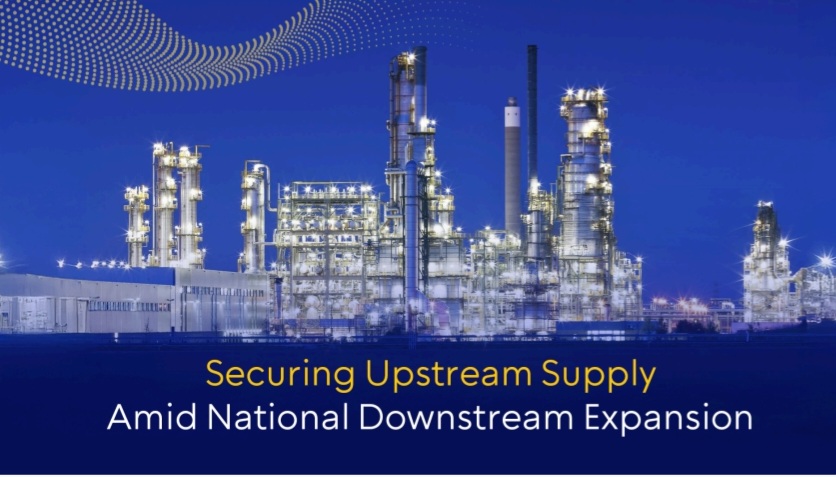
EconomicReview – The recent inauguration of the refinery unit expansion under the Balikpapan Refinery Development
Master Plan (RDMP) project is more than just a celebration of physical infrastructure progress. For the national energy sector, this momentum marks a paradigm shift from being a raw material exporter to a
nation with greater processing sovereignty. With the increase in Balikpapan’s refinery capacity from
260,000 barrels per day (bpd) to 360,000 bpd, Indonesia’s collective processing capacity has now
surpassed the 1.1 million bpd milestone.
“This country will never advance without industrialization and downstreaming. Otherwise, we will only be a nation suffering from the natural resource curse.” (Source: Statement by Minister of Energy and Mineral Resources Bahlil Lahadalia at various official forums, late 2025).
However, behind the roar of the growing scale of refinery operations, structural challenges emerge that
require serious attention from all stakeholders. The central government’s energy downstreaming program
has noble goals: increasing economic value added, strengthening industrial resilience, and reducing the
trade balance deficit by cutting fuel product imports. To strengthen this downstream ecosystem,
synchronized integration is required to ensure national industrial competitiveness.
Data indicates a widening gap between downstream ambitions and upstream production realities.
According to SKK Migas annual achievement reports, national crude oil lifting currently fluctuates
between 580,000 and 600,000 bpd. Based on 2025 data from the Ministry of Energy and Mineral
Resources and SKK Migas, domestic production only covers about 55% of the total national
consumption, which has reached 1.5 million bpd.
If this disparity is not immediately mitigated through significant increases in upstream production,
magnificent downstream facilities like the RDMP risk facing operational pressure. Instead of reducing
foreign dependence, large refinery capacities without domestic supply support will force Indonesia to
significantly increase crude oil imports just to maintain optimal refinery utilisation. Economically, this merely shifts the import burden from finished products (fuel) to raw materials, which remain vulnerable to global oil price fluctuations and the depreciation of the Rupiah.
Therefore, downstreaming must not be viewed as an isolated sector. The downstream sector requires
“supply” in the form of a stable, sustainable crude oil supply that is geographically close to processing
facilities to minimize logistics costs. This alignment is crucial so that downstream capacity expansion
receives optimal support from the upstream side, creating a synergy that ensures every step of our energy development has a solid supply foundation.
Exploration: The Heart of Oil and Gas Industry Sustainability
Indonesia’s upstream oil and gas industry is currently in a race against time. Most of Indonesia’s major oil
and gas fields have entered the mature phase, with a natural decline rate averaging 10% to 15% per year.
Efforts to optimize existing wells through infill drilling and Enhanced Oil Recovery (EOR) remain vital
operational pillars, but they must now be coupled with massive acceleration in exploration to maintain
long-term supply sustainability.
Discovering new reserves through exploration, especially in frontier areas and the deep waters of Eastern Indonesia is the only way to reach the production target of 1 million barrels per day by 2030. Exploration is not merely a technical activity of finding drilling points; it is a high-risk investment decision involving immense capital. For industry players, investment security guarantees and legal certainty are determining factors.
The government has signaled a positive shift through various regulatory improvements, but field
challenges persist. The lead time from exploration to the commercial production stage takes years. If
exploration activities are not aggressively accelerated today, the gap between downstream refinery
capacity and upstream supply will widen even further in the coming decade. Exploration must be treated
as a national priority equal to downstream infrastructure development, because without new reserve discoveries, the energy independence envisioned through downstreaming will lose its primary foundation.
The Indonesian Petroleum Association (IPA) consistently emphasizes that the upstream and downstream sectors are one integrated value chain. The success of downstreaming must be measured by how well the sector strengthens overall national industrial resilience, rather than just shifting the point of import. In line with the 2026 National Energy Vision, the IPA focuses collaboration on four strategic priority pillars : massive exploration acceleration, improvement of the investment and regulatory climate, operational digitalization, and a planned energy transition.
Among these four pillars, massive exploration acceleration is the most urgent foundation. Without
significant new reserve discoveries, the supply sustainability for modernized national refineries will
continue to face structural challenges. Therefore, strengthening the upstream side is not just about
increasing production; it is a strategic step to ensure that our downstream expansion has an independent
and sustainable supply base in the long term.
Consequently, a synchronized roadmap between relevant ministries and agencies is needed to bridge the aspirations of industry players with government policies. This synchronization includes several strategic points: The government’s step in inaugurating the Balikpapan RDMP and pushing for downstreaming deserves appreciation as a bold move toward economic transformation. However, this momentum must serve as an alarm for all of us to look back toward the upstream. We cannot allow the downstream sector to race ahead alone without being accompanied by strengthening in the upstream sector.
Downstreaming is the great ship carrying us toward energy sovereignty. However, the sustainability of
that ship’s voyage depends on how hard our upstream engines work. By synergizing downstream
ambitions and upstream realities within a single policy framework, Indonesia will not only possess
modern refineries but also sovereignty over its own energy resources. Maintaining the sustainability of the
upstream sector is not just a matter of business. It is about sustaining the long-term independence of the nation.